
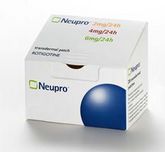
Neupro (Rotigotine) – 6mg/24HR 7 pathces
Description
On May 9, 2007, FDA announced the approval of Neupro (rotigotine transdermal system), a skin patch designed to treat symptoms of early Parkinson’s disease.
Rotigotine is a drug not previously approved in the United States. Neupro, manufactured by Schwarz Bioscience of Research Triangle Park, N.C., is the first transdermal patch approved for the treatment of symptoms of Parkinson’s disease.
How Neupro works:
Parkinson’s disease, which belongs to a group of conditions called motor system disorders, results from the loss of dopamine-producing brain cells. Rotigotine is a member of the dopamine agonist class of drugs and is delivered continuously through the skin (transdermal) using a silicone-based patch that is replaced every 24 hours. A dopamine agonist works by activating dopamine receptors in the body, mimicking the effect of the neurotransmitter dopamine.
Side effects:
The most common side effects for Neupro included skin reactions at the patch site, dizziness, nausea, vomiting, drowsiness and insomnia, most of which are typical of this class of drugs. Other potential safety concerns include sudden onset of sleep while engaged in routine activities, such as driving or operating machinery (sleep attacks), hallucinations, and decreased blood pressure on standing up (postural hypotension).
More about Parkinson’s disease:
More than 1 million Americans live with Parkinson’s disease and 60,000 new cases are diagnosed each year, according to the Parkinson’s Action Network The four primary symptoms of Parkinson’s are trembling in the hands, arms, legs, jaw, and face (tremor); stiffness of the limbs and trunk (rigidity); slowness of movement (bradykinesia,); and impaired balance and coordination (postural instability). As these symptoms become more pronounced, patients may have difficulty walking, talking, or completing other simple tasks.
Reviews
There are no reviews yet.